Showing posts with label Eva Kowalska. Show all posts

Monday, August 19, 2024

Sinclair Beiles in Cape Town


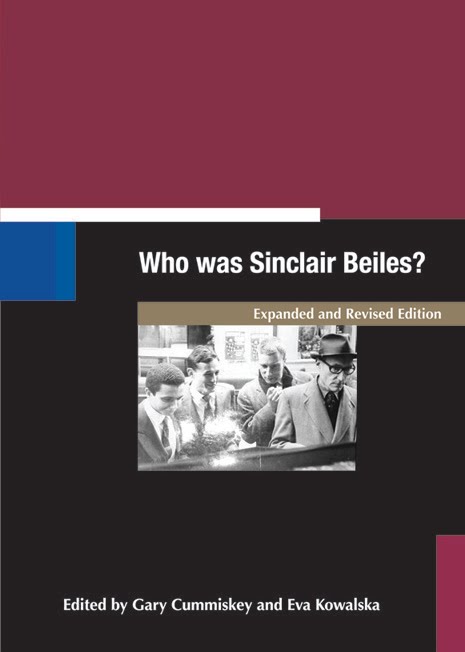
 Good to see that Gregory Penfold in Cape Town has received his copy of Who was Sinclair Beiles?, published by Dye Hard Press.

Thursday, October 5, 2023

Glowing review of Who was Sinclair Beiles?


I found this glowing review of Who was Sinclair Beiles? on Goodreads today: I certainly could not have asked for more!

Thank you, Mat!

**************

An excellent 'festschrift' (or 'celebration'), rather than a strict biography, on the mysterious South African beat writer, Sinclair Beiles.

Beiles is probably most famous for helping Burroughs get Naked Lunch published at Olympia through Girodias, at a time when Burroughs was really strung out on paregoric and/or heroin. His most famous work in print is probably as one of the four contributors (Beiles, Burroughs, Corso & Gysin) of the now legendary cut-up compilation, Minutes to Go, published in 1960.

 However, as this book illustrates, Beiles is [sic] quite a prolific poet and playwright and apart from the above two works, much of his writing has surfaced 'under the radar' and hasn't been the subject of much attention by either critics or fellow poets and writers. Beiles is someone whose quality of writing is as notoriously inconsistent as it is hard to track down and read his books in the first place.

One of his books of poetry, Yeoville, for example, was only published in a limitation of 4 copies.

What Beiles has in common with Burroughs is their meeting in Tangier and in Paris, an interest in drugs, an interest in experimental artists and writers and also, interestingly, a regular allowance from their families which allowed them both to focus much time on their writing.

I hope this book goes some way to revealing more about this great writer to the literary world. His poetry and plays have been criminally neglected and underrated and it is high time that his work is evaluated alongside many of the other great beat writers who are already firmly and undeniably well ensconced in the beat cannon and annals of history (in particular Burroughs, Kerouac and Ginsberg).

Gary Cummiskey and Eva Kowalska have done a terrific job of compiling these (mostly flattering) articles on Sinclair and his art. This is the best introduction to a little-known artist.

If you can obtain a copy, I recommend getting the second edition which is revised and expanded and contains an excellent bibliography-in-progress of Beiles' works in print.

Read the original post.

Sunday, September 25, 2022

Raymond Foye writes about Who was Sinclair Beiles?


Burning the midnight oil with SINCLAIR BEILES, a wonderful poet who I always heard about, but knew very little about. A South African poet who lived at the Beat Hotel and was the editor of Naked Lunch + Samuel Beckett, at Olympia Press, followed by many years of mental illness which he often documented in his poems. Thanks to Gerard Bellaart for sending this book, full of essential information and many poems.


Originally posted on Facebook, 25 September, 2022.

Wednesday, March 3, 2021

Sinclair Beiles and the Beat Generation

 A new article about Sinclair Beiles has been published in New Frame, and Who was Sinclair Beiles?, which was published by Dye Hard Press, gets a mention.

The article starts: The 1950s were a tumultuous time for an Australian criminal and con artist called William Lindsay Pearson. An array of jewels was stolen from Brenthurst, the Johannesburg estate of the Oppenheimer family, founders of the Anglo American mining giant, in 1955. This treasure was, ultimately, derived from political connections to the apartheid state and the exploitation of Black workers.  ... more.

Tuesday, January 26, 2016

Review of Who was Sinclair Beiles? by Dawn Swope

This little book grows and grows. It is a revised and expanded edition, the third edition in all. The book
first surfaced in 2009.

Little was known about Sinclair Beiles outside of his home country, South Africa. He got a name largely by being around Burroughs, Gysin, Ginsberg and Corso at the ‘Beat Hotel’ in Paris in the 1950s. There were photos of them all together. Beiles collaborated on the cult book Minutes To Go in 1960. There were conversations about books in the pipeline. Beiles worked at the Olympia Press, famous of course for Maurice Girodias and Junkie and other things.

Beiles never quite established his name in Europe and he struggled in his homeland also. His Ashes of
Experience won prizes but caused few ripples anywhere.

But he had a gift and a band of people did believe in him over the years. Gary Cummiskey for one, Fred de Vries, Carl Weissner, Heathcote Williams. They all befriended Beiles through Europe, Amsterdam, London, Greece, South Africa.

Beiles was hampered by his drug consumption, his personal issues. He was always on the cusp of something. He was a casualty of the literary world, a sometime Syd Barrett figure. A nearly man.

Gary Cummiskey and Eva Kowalska have researched and then some more to strip away the layers of time and fog around Beiles. More understanding, photos, bibliographies, letters. Well done to them.

Published in Beat Scene no 80, December 2015


Monday, April 13, 2015

Sinclair Beiles: Poet of Many Parts and Places, by Jan Herman


Dye Hard Press has re-issued Who Was Sinclair Beiles? in a revised and expanded edition. I posted an item about the first edition when it was published five years ago. It’s hard to believe so much time has passed. As I wrote then, Beiles was best known for his association with the Beats. He collaborated on Minutes to Go with William Burroughs, Brion Gysin, and Gregory Corso, and helped to shepherd Burroughs’ manuscript of Naked Lunch into print at the Paris-based Olympia Press, where he worked as an editor. “Best known” is a questionable term, though. If he was known at all, it was only among a certain segment of avant-garde expatriate writers and artists living in Tangier, Paris, London, Rotterdam, Athens, and other far-flung places, where he spent many years scraping by in various capacities....Read more

Tuesday, March 17, 2015

Sinclair Beiles: a man apart by Josh Medsker


Sinclair Beiles was a South African writer associated with the Beat movement of the late 50s and early 60s. During the time of his earliest successes, he moved from South Africa to Paris, to live with the community of writers and artists, which included Gregory Corso, Brion Gysin, and William Burroughs, among others, at what would become known as The Beat Hotel. Yet, this “beat” tag could not contain him. He also spent the early 60s in Greece, working with the Greek artist Takis on multimedia works, all the while spooling out his own brand of surrealistic, enigmatic poetry. He floated around Europe in the decades that followed… coming back to his homeland in the 90s, settling down in the artists’ enclave of Yeoville, in Johannesburg. He continued to experiment restlessly, until his death in 2000. He is relatively unknown outside of Beat and South African literary circles. Hopefully this article will go a long way towards correcting that. More .

Friday, January 30, 2015

Out now: Who was Sinclair Beiles?, revised and expanded edition.


Available from Dye Hard Press at R150 per copy, including postage (South Africa only). Email dyehardpress@iafrica.com.  For overseas orders, price will vary according to increased postal rates - please enquire with publisher.

Sunday, May 15, 2011

’n Roerende chaos

Indien jy wil weet hoe jy in die laaste dekade verander het, hoef jy net ’n boek of ’n gedig te lees waarvan jy tien jaar gelede gehou het. Só het ek agtergekom vele literêre helde het intussen saam met my jeugdige romantiek en boheemse versugtinge gesneuwel.


Onder hierdie dooie ikone tel die meeste skrywers van die Beat-generasie wat die wêreld- letterkunde in die 1950s onherroeplik verander en die deure afgeskop het vir die kontra-kulturele revolusie van die 1960s..Read more here

Saturday, August 21, 2010

Qui était Sinclair Beiles? - Dionysos Andronis

Avec cette collection d'essais le poète Gary Cummiskey rend hommage posthume à son compatriote homologue Sinclair Beiles (1930-2000). Nous avions écrit un article sur le dernier recueil de Cummiskey Aujourd'hui est leur Créateur (voir notre Kagablog du mois de décembre 2008). Cette fois, nous aimerions tirer votre attention sur cette collection essentielle. Nous avions acquis une bonne impression de Cummiskey comme critique littéraire par sa revue Green Dragon. Maintenant avec cette collection d'essais notre première impression est confirmée.

Ce n'est pas parce que Beiles est resté longtemps en Grèce que nous avons été motivés pour écrire cet article mais par le fait que Beiles était un proche des beatniks américains et qu'il est resté pendant un moment à Paris. Il avait co-habité avec eux à l'Hôtel parisien Beat (aujourd'hui renommé "Relais Hôtel Vieux Paris"). "Le fait que Beiles avait une collaboration avec les écrivains Beat à Paris était une coincidence brève. Le fait aussi qu'il était plus un fan qu'un similaire dans cet hôtel Beat ne renverse pas son identité Beat" (une citation de Eva Kowalska, op.cit., page 85).

Le critique littéraire américain George Dillon Slater écrit : "Sinclair à Athènes faisait son autopromotion et pratiquait la psychanalyse dans un café près de la place Kolonaki. C'était une bonne idée parce que les Grecs s'autoproclament extrêmement intelligents", op.cit. page 67. Cette touche ironique de Slater vient compléter notre estimation personnelle de cette "inteligentsia du café expresso" grecque et pourrait justifier la dépression nerveuse de Sinclair Beiles en Grèce : "Souvent Sinclair était interné dans une clinique grecque pour retablir et après il venait chez moi dans l'île de Hydra pour reposer" (op.cit. page 63).

Gary Cummiskey est un poète important et avec ce livre il nous confirme qu'il est aussi un grand humaniste des lettres.

Thursday, March 18, 2010

Excerpts from Who was Sinclair Beiles? on RealityStudio

The following is an excerpt from Gary Cummiskey and Eva Kowalska, Who Was Sinclair Beiles?, published in 2009 by Dye Hard Press. The book contains interviews and essays that create a portrait of Sinclair Beiles, the South African poet who worked for Olympia Press, helped to edit Naked Lunch, and collaborated with William Burroughs, Brion Gysin, and Gregory Corso on the first cut-up book, Minutes to Go."...Read more here

Wednesday, December 2, 2009

Writing on the margin from the margin: Who was Sinclair Beiles?

Gary Cummiskey

Gary Cummiskey

Gary Cummiskey, Michael Titlestad

Gary Cummiskey, Michael Titlestad

Fred de Vries

Fred de Vries

Eva Kowalska, Fred de Vries

Eva Kowalska, Fred de Vries

From left: Gary Cummiskey, Michael Titlestad, Eva Kowalska, Fred de Vries.

All photographs courtesy of Arja Salafranca
Thursday, October 29, 2009

Writing on the margin from the margin: Who was Sinclair Beiles?

Dye Hard Press, in conjunction with WISER, invite you to

Writing on the margin from the margin: Sinclair Beiles

Who was Sinclair Beiles?, a compilation of writings about the South African Beat poet who died in 2000, was recently published by Dye Hard Press.

Co-editors Gary Cummiskey and Eva Kowalska, along with contributor Fred de Vries, will discuss issues about the book, such as:

· Why has Sinclair Beiles’s work been neglected in South Africa?
· Why has there previously been no serious attempt to evaluate his work, and why has it fallen to a small publisher to make the first attempt at doing so?
· What are the challenges involved in trying to evaluate a marginalised writer such as Beiles?
· What is the purpose and relevance now, in 2009, in writing about Beiles?

The panel discussion will take place in the Seminar Room at WISER, 6th Floor, Richard Ward Building, East Campus, Wits University on Monday, 9 November 2009, at 18:30


Copies of Who was Sinclair Beiles? will be on sale at the event

Thursday, September 17, 2009

Interview with Gary Cummiskey and Eva Kowalska about Who was Sinclair Beiles? on Litnet

Interviewer Janet van Eeeden: I found Who Was Sinclair Beiles? a fascinating read. It was so interesting to read about Sinclair Beiles, someone I didn't know much about, from so many different perspectives. The interviews between Beiles and Gary Cummiskey and Beiles and dawie malan especially throw much light on the nature of the man himself. The essays by Cummiskey, malan, Earle Holmes, Alan Finlay, Eva Kowalska, George Dillon Slater and Fred de Vries serve to delve behind the man's words and give us a glimpse into a unique character. I'd be grateful if you answered a few of my questions about this enigmatic man....
Read more here

Monday, August 31, 2009

Kaganof on Who was Sinclair Beiles?

eventually one has to love gary cummiskey. he does not give up. he’s the kind of irascible soul that always draws trouble. something about his pugnacious nature attracts difficulties. if it can go wrong at a printer it will. twice. gary’s often stuck in traffic. the waiter dusts more flies into his soup. but unlike most people you’ve ever met who share this streak of disaster-attraction - cummiskey hasn’t got it in him to throw in the towel. you would have thought after years of publishing small press editions to little or no acclaim from the precarious south african literature “establishment” that gary would see the light and stop bothering. thank the gods he’s not that sort of bloke. gary persists. his persistency is the stuff of local literary legend.

green dragon 6 is the best edition of his literary journal to date. and this volume about the late yeoville beat poet sinclair beiles is worth its weight in genetically modified stem cells. it keeps beiles alive. a collection of essays by the likes of alan finlay, fred devries, co-editor eva kowalska and gary himself, the book sheds shards of splintered, diffused and hazy light on the figure of beiles whose reputation is based largely on memories of his surly frame sitting truculently outside coffee society in rockey street, chain smoking irritably - has anyone ever read any of his poems?

in yeoville in 1994 to film nice to meet you, please don’t rape me i was introduced to beiles by my co-screenwriter peter j. morris, himself an equally taciturn, sour-bellied type. the two of them found things to grumble about. it was impossible for me to talk to beiles. he just seemed too far gone in a vinegary disposition exacerbated by the brutal disappointment of never having ‘made it’ (whatever that means to a poet). but this volume opens the man up. dawie malan’s exquisite essay “the trouble with sinclair beiles” resuscitates the poet, gives him a fragile, vulnerable soul - and reveals librarian dawie to be one of our most sensitive writers.

this book is essential. one day somebody will be collating a set of essays asking the question “who is gary cummiskey?”he deserves better. he deserves to be lionised now.

First published here

Saturday, August 15, 2009

Editors' introduction to Who was Sinclair Beiles?

The idea for Who was Sinclair Beiles? originated in early 2008, after an edited version of an interview I had conducted with Beiles in 1994 was finally published in the literary journal New Coin. I had intended to put together a small number of previously published pieces about Beiles that had been written by Alan Finlay, dawie malan and myself – the latter two had been written for a feature on Beiles published on the donga website (now offline) that challenged his exclusion from the South African literary canon. However I did not feel these would be enough to create a bound book. On the other hand I did not wish to publish about 300 pages of contributions about ‘crazy Sinclair’, with an emphasis on his erratic behaviour as a result of his mental illness, although I realised it would be impossible not write about Beiles’s illness, because it was intrinsic to his work. Instead I wanted a compilation of writings that focused mainly on Beiles as a poet by people who had met him and/or respected his work.

In biographies of the major American Beat writers, such as William Burroughs or Allen Ginsberg, Beiles is often given a mere walk-on part. For example, in Barry Miles’s detailed The Beat Hotel, more attention is given to writers who were not even involved in the Minutes to Go collaboration. Thus Beiles is represented as, to use Joyce Johnson’s phrase, a minor character. Even in South Africa his work is almost totally ignored, and it is hoped this book will lead to some serious consideration of Beiles the poet.

Who was Sinclair Beiles? is not a biography, nor does it pretend to be an authoritative work about him. It is intended rather as a tribute, and was produced while keeping both financial and time constraints in mind. When I invited Eva Kowalska – who is completing her Master’s degree on Beiles’s work – to come on board as co-editor, she, like myself, was restricted by the demands of a fulltime job and other responsibilities. So, with a few exceptions, we opted to use previously published or readily available material.

The first part consists of memoirs about, and interviews with, Beiles by malan, Earle Holmes, George Dillon Slater and myself. In the second part of the book, Kowalska examines Beiles’s poetry with an emphasis on his relationship to the American Beat poets, while in a review of the Beat Hotel Exhibition in Johannesburg, Finlay provides a snapshot of Beiles in the Rockey Street milieu in the mid-1990s. Fred de Vries, who is working on a biography of Beiles, describes some of his journeys and interviews in Africa, England and Europe as part of his research. Lastly, we examine some of the reasons for Beiles’s relative obscurity and provide a bibliography of his publications.

There is some overlap in the book, particularly in the interviews. Editorial cuts have however been kept to a minimum.

Gary Cummiskey


My experience of undertaking a study of Sinclair Beiles’s writing has been frustratingly, but intriguingly, devoid of much useful secondary material. There is very little information available about Beiles, much less so about his work. Many people know of him, though not really about him, and, aside from a handful of reviews of his earlier collections, notably Ashes of Experience, he seems to have become a name without a presence in South African literary culture. This is
unfortunate, because in addition to a colourful reputation Beiles left behind a considerable amount of poetry and plays. Though admittedly it is uneven in quality, I have found his writing to be innovative, humorous, and genuine. Though he is remembered primarily as a poet, his plays and dramatic fragments, a handful of which were staged during his lifetime, reveal a versatile writer with a talent for satire and an unusual outlook which remains interesting beyond its original context.

My involvement in this project came as a result of perceiving a lack of material on Beiles, be it factual biography or any real consideration of his work. I see Who was Sinclair Beiles? as an opportunity to do something towards remedying that gap. Secondly, it was out of a desire to assert Beiles as a poet worth considering, remembering, studying, writing about – someone who should not continue to be left out of our conceptualisation of South African and/ or Beat literature.

Rather than being a complete summary of Beiles as a person and a poet, which would be impossible, or a thorough appraisal of his life and his writing, which would be a vast and entangled project, I hope that this book is a start in the right direction. I hope that it will encourage others to reinvestigate Beiles’s writing, and that it might be useful to them in doing so. I feel that it goes some way towards establishing the worth of a poet who has been almost systematically ignored on his home ground. Through the previously published texts and new perspectives offered it might provide a context or a framework for understanding and appreciating a writer who has long been preceded by his reputation to the detriment of knowledge and appreciation of his art.

Eva Kowalska